Planning · Mexico City
First Time in Mexico City
Plan your first CDMX trip: how far the airport is, Uber vs taxi, best neighborhoods to stay, what to see, where to eat, how to eat safely, how to stay safe, museums, Teotihuacan, and 3-5 day itineraries.
For a short first trip, base in Roma, Condesa, or Juárez, do Centro Histórico, the Anthropology Museum, Coyoacán (book Frida early), and one day trip to Teotihuacan. Eat constantly at busy taco stands, use Uber or DiDi instead of street cabs, skip tap water, and respect altitude on day one. Four days is the sweet spot; three works if you choose hard.
Mexico City rewards people who plan the boring parts once, then leave room to eat and wander. This is the short-trip planning guide for first-timers: how far the airport really is, whether to use Uber or a cab, which neighborhood to book, what to see, where to eat, how to eat safely, how to stay safe, and the 3-5 day shapes that actually work.
If you want the longer encyclopedia (packing deep-dives, longer stays, more neighborhood rabbit holes), use the Ultimate Guide to Mexico City. This page is the trip you can build in one sitting.
How many days do you need in Mexico City?
Three days is enough for a highlight reel if you choose hard: Centro, Anthropology / Chapultepec, and either Coyoacán or Teotihuacan (not both).
Four days is the consensus sweet spot for first-timers. You get Centro, Anthropology, Coyoacán, and Teotihuacan without living in an Uber for 12 hours a day.
Five days adds breathing room: a private Xochimilco afternoon, lucha, a dedicated taco crawl night, or a slower Roma / Condesa food day with zero museum guilt.
A week is better if you hate rushing museums or want a second day trip. Do not try to "see Mexico City" in a layover afternoon and call it a trip.
Best time to visit Mexico City
October through April / early May is the easiest weather window (drier, clearer days for walking and Teotihuacan).
October-November brings Día de Muertos energy, ofrendas, and heavier hotel demand. Magical if you book early and stay respectful; crowded if you wing it.
March often means jacarandas. June-September is rainy season: afternoon showers are common, hotels can be cheaper, and days are still usable if you keep indoor options ready.
Altitude matters year-round. CDMX sits around 2,240 m (about 7,350 ft). Day one: water, lighter alcohol, slower stairs.
How far is the airport from Mexico City (and how to get to your hotel)
MEX vs NLU (read your ticket)
Most visitors land at AICM / MEX (Benito Juárez), the main Mexico City airport close to the urban core.
Some flights use AIFA / NLU (Felipe Ángeles) farther north. That is still "Mexico City" on a booking engine and a completely different transfer. Confirm the airport code before you assume a 40-minute ride.
How long does the transfer take?
From MEX to Roma, Condesa, Juárez / Reforma, or Polanco, plan roughly 30-60 minutes by car in normal conditions. Peak traffic can push that toward 60-90 minutes. Build buffer time for the ride back to the airport (many travelers leave 2-3 hours before international flights).
From NLU, plan on a long haul into central neighborhoods: often 1.5-2.5+ hours depending on traffic and exact hotel. Budget more money and more patience.
Airport to hotel: what to do
- Uber or DiDi for most visitors (install both before you land; follow the app's current pickup instructions; arrivals-curb rules change)
- Prepaid authorized airport taxi from official desks inside the terminal (Sitio / Transportación Terrestre style booths)
- Hotel private transfer if you want zero decisions after a long flight
Skip random people offering rides in baggage claim. That is not the local "hack."
Uber vs taxi in Mexico City (use this rule)
Default visitor rule: Uber or DiDi, not random street cabs.
Why locals and frequent visitors push apps:
- Price is shown before you ride
- Driver and plate are tracked in the app
- You are not negotiating cash on a dark curb
- It removes a lot of the old "unmarked taxi" risk stories tourists still Google at 1am
When a non-app car is fine
- Prepaid official airport taxi desk
- Hotel taxi / sitio stand your hotel sends you to
- Rare cases where apps are surging and you already trust the stand
When to avoid it
- Hailing an unmarked libre taxi off the street
- Accepting a "helpful" stranger's car outside a club or museum
- Paying large cash fares with no receipt and no app trail
You almost never need a rental car for a classic first short trip. Parking, one-ways, and traffic will eat the trip.
Metro, Metrobús, and walking
- Walk inside Roma, Condesa, Coyoacán plazas, Polanco pockets, and Centro blocks
- Metro / Metrobús when you are light on bags and want to beat traffic (get a Movilidad Integrada card at a station)
- Avoid rush hour with luggage (roughly 7:30-9:30am and 5:30-8pm)
- Late night: rideshare is usually easier than figuring out transfers tired
Traffic is real. A Maps estimate of 20 minutes can become 45. Group your days by geography.
Where to stay in Mexico City for the first time
Your base decides whether the trip feels easy or exhausting. On a 3-5 day visit, location beats a $20/night "deal" in a colonia you will Uber out of every meal.
Roma Norte (best default for many first-timers)
Walkable dinners, cafes, galleries, and nightlife energy. Stay near Álvaro Obregón or Plaza Río de Janeiro if you want the classic grid. Full breakdown: Roma Norte guide.
Condesa (parks + softer evenings)
Greener, residential, easy to combine with Roma on foot. Good if you want morning park walks and evening mezcal without living on the loudest corner. See Condesa guide.
Juárez / Reforma (logistics + hotels)
Central, hotel-friendly, often smoother airport hops, solid taco and restaurant options. Less "pretty colonia Instagram" than Roma; often more practical for short stays. See Juárez guide.
Polanco (polish + fine dining)
Polished hotels, shopping, Soumaya, and the city's fine-dining gravity (including both two-star Michelin houses). Less lively street wandering after dinner than Roma. See Polanco guide.
Coyoacán (great day; selective base)
Plazas, market energy, Frida. Farther from Centro and Chapultepec as a nightly base for a short trip. Better as a day visit unless you specifically want a quieter southern stay.
Centro Histórico (visit by day)
Essential sightseeing. As a hotel base it is hit-or-miss: some solid properties exist, but evenings are more selective and many first-timers still end up riding to Roma / Condesa / Juárez for dinner energy.
San Rafael (eat here; usually do not base here)
Under-the-radar food neighborhood and a Guateque favorite for taco nights that feel local. Excellent evening destination. See San Rafael guide.
What to see and do in Mexico City (short-trip priorities)
If you only remember one list, remember this.
Must-do on almost every strong first trip
- Centro Histórico: Zócalo, Metropolitan Cathedral, Templo Mayor, walk toward Palacio de Bellas Artes
- Museo Nacional de Antropología (give it a real morning in Chapultepec)
- One serious taco night in a busy neighborhood (not a lonely English-menu alley)
- Coyoacán: plazas + market; Frida Kahlo Museum if tickets exist
- Teotihuacan day trip if you have a fourth day
Add if you have a fifth day or clear preferences
- Private Xochimilco trajinera afternoon
- Lucha Libre at Arena México
- Polanco architecture + Soumaya (free) or a Michelin dinner
- A slower Roma / Condesa food and parks day
- San Ángel or a second museum cluster if art is your whole reason for coming
Common first-timer mistakes
- Trying to do Teotihuacan + Frida + Centro in one day
- Skipping Anthropology because "museums are boring" (this one is not)
- Eating only in hotel dining rooms
- Booking nothing and losing Frida tickets
- Crossing the city three times a day for Instagram pins
- Treating Día de Muertos ofrendas like a costume party set
Top museums for a first trip
Mexico City has an absurd number of museums. On a short trip, start here.
1. Museo Nacional de Antropología
The non-negotiable. Pre-Hispanic Mexico under one roof, including the Sun Stone and halls that make Teotihuacan make sense afterward. Arrive at opening. Pick 3-5 halls deep (Mexica / Aztec and Teotihuacan are the usual first-timer core) instead of sprinting every room. Closed Monday.
2. Museo Frida Kahlo (Casa Azul)
Timed tickets sell out, sometimes weeks ahead. Book on the official site before you land. Pair with Coyoacán plazas and market, not a rushed Uber-in Uber-out. Closed Monday.
3. Castillo de Chapultepec
History rooms, period interiors, city views. Easy to combine with Anthropology if you keep castle time bounded. Often closed Tuesday (confirm current hours).
4. Templo Mayor Museum
The excavated heart of Tenochtitlan beside the Zócalo, plus the site museum. This is the "you are standing on the old city" feeling Centro is famous for. Closed Monday.
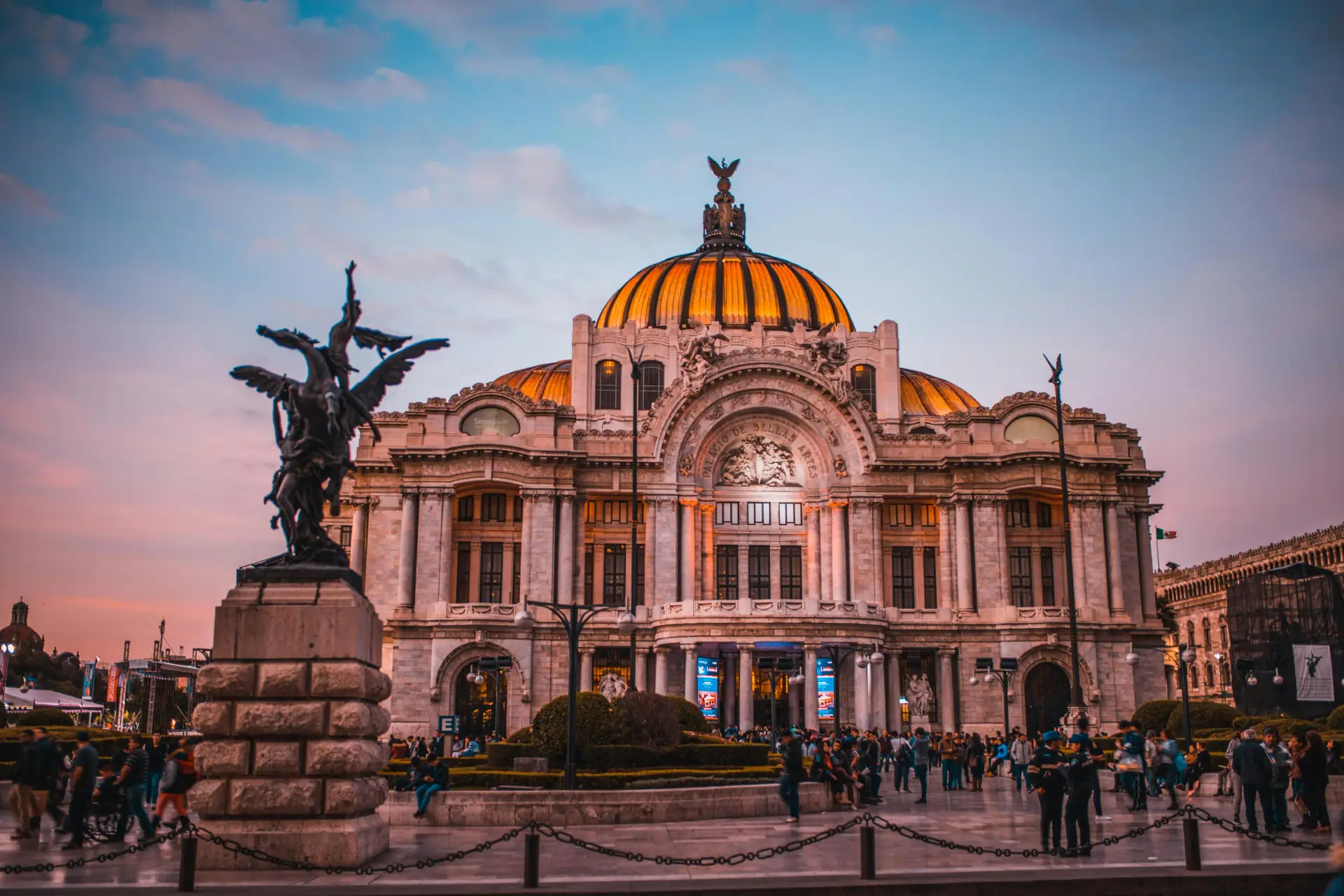
5. Palacio de Bellas Artes
Architecture, murals, and the city's cultural living room. Even if you skip a full museum deep-dive, see the building.
Strong extras: Museo Soumaya (free, Polanco / Plaza Carso), Museo Tamayo, Museo de Arte Moderno, Museo Casa Estudio Diego Rivera & Frida Kahlo in San Ángel.
Where to eat in Mexico City (tacos first, Michelin second)
If you only "do" restaurants, you miss the point of CDMX. The daily highlight for most first-timers is standing at a busy trompo, not only scoring a hard reservation.
Taco styles to know on night one
- Al pastor: trompo pork, pineapple, onion, cilantro
- Suadero: silky beef, often a Centro daytime classic
- Carnitas: confit-style pork, usually earlier in the day
- Canasta / guisado: filled or stew-style tacos for variety
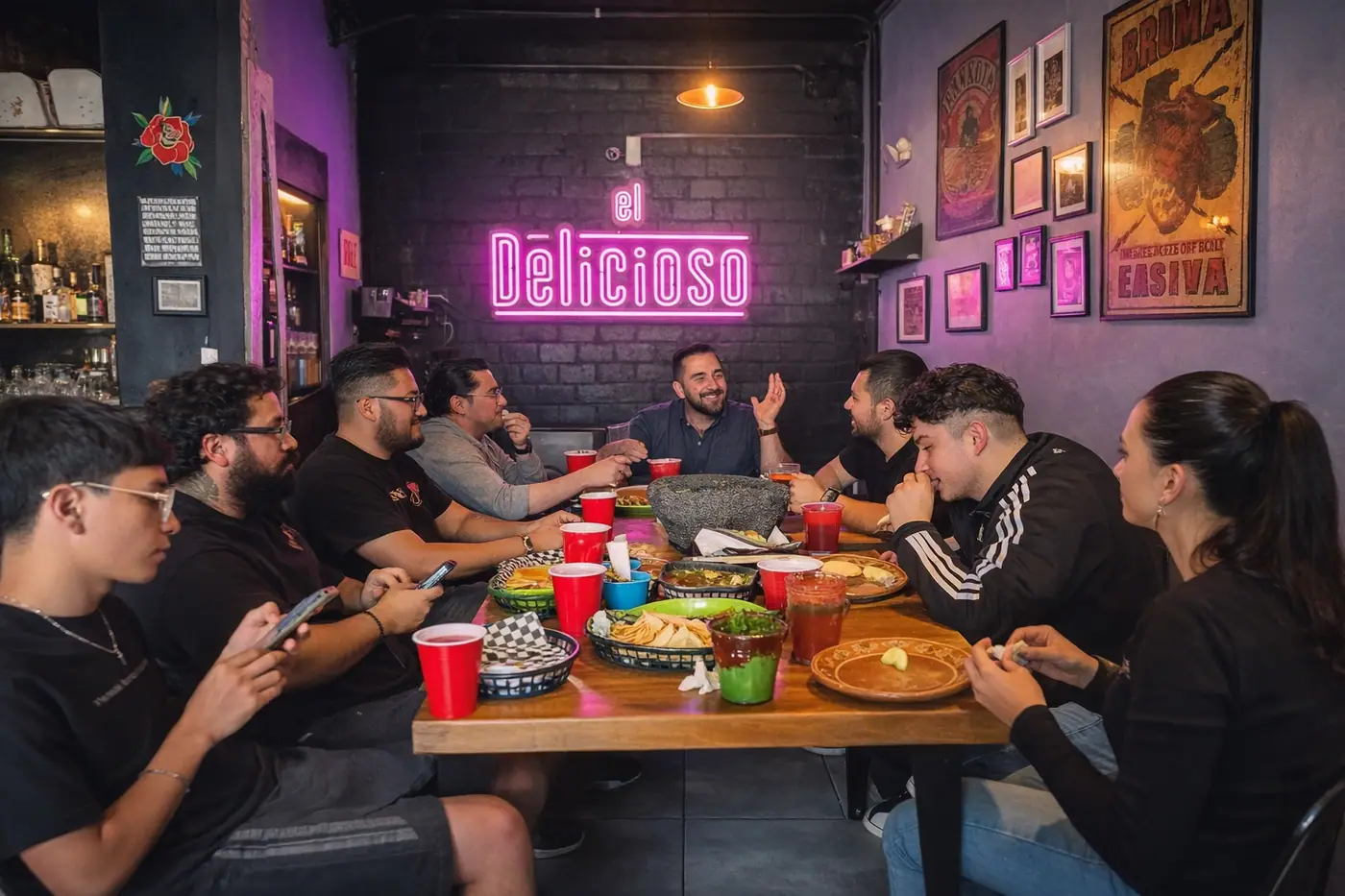
Order two or three at a time, then reorder. Full field notes: Best tacos in Mexico City. If you want a hosted night without guessing stands, our San Rafael taco crawl is built for that.
Markets worth a morning
- Mercado de Coyoacán (easy with the Frida day)
- Neighborhood markets near Roma / Medellín for produce and stalls
- San Juan if you want the "chef market" reputation (go curious, not only for novelty insects)
Fine dining and Michelin (2026 snapshot)
Mexico City is a serious restaurant city. The Michelin Guide Mexico (2026 selection) still puts Pujol and Quintonil at two stars in Polanco. One-star names first-timers hear often include Rosetta, Máximo, Em, Esquina Común, Expendio de Maíz, Masala y Maíz, Sud 777, Gaba, and La Once Mil. Lists change; confirm on guide.michelin.com before you plan a whole night around a star.
Practical approach
- One reservation night in Polanco or Roma if that is your love language
- The rest of your meals: markets, taquerías, cantinas, and busy street stands
- Dress codes vary; Polanco fine dining is smarter than beachwear
Taco note: Taquería El Califa de León became famous as a Michelin-starred taco counter in earlier guide years; it is no longer on the 2026 starred list. It can still be worth a visit as a classic. Treat stars as a moving signal, not a permanent ranking.
How to eat safely in Mexico City (street food included)
You can eat street food and still be smart. The goal is high-turnover kitchens, not fear.
Tap water and drinks
- Do not drink tap water as a visitor
- Use bottled or filtered water for drinking (and usually for brushing teeth)
- Bottled, canned, or sealed drinks are easy wins
- Ice in established restaurants is typically purified; still use judgment at random carts
Green flags at a taco stand
- Busy stand, high turnover
- Meat cooked to order on a hot plancha or trompo
- Tortillas heated in front of you
- Locals eating, not only tourists photographing
Yellow / red flags
- Empty cart, food sitting lukewarm
- Seafood that looks tired
- Someone aggressively steering you from a busy stand to an empty one
Deep dive: How to eat safely at a taco stand.
How to stay safe in Mexico City as a tourist
Central visitor neighborhoods are workable for most tourists who use normal city habits. The main visitor risks are petty theft, phone snatching, and bad transport decisions, not the cartel documentary you watched before packing.
Do
- Base in Roma, Condesa, Juárez, Polanco, or a carefully chosen Centro stay
- Use Uber / DiDi instead of random curb taxis
- Keep phones off curb edges in traffic
- Walk busy lit streets; rideshare when a block feels empty
- Use ATMs inside bank branches when you can
- Keep bags closed on Metro and in crowds
Do not
- Treat national cartel headlines as a map of Condesa
- Flash cash, jewelry, or drunken confidence
- Follow "helpful" strangers to unmarked cars
- Wander empty side streets late with your phone out for Maps the whole way
Solo travelers
Many solo travelers, including women, have excellent trips. Stick to busy restaurant streets at night, share live location if that helps you, and skip "just this one shortcut" through a dark block.
Longer honest version: Is Mexico City safe?.
Money, tipping, Spanish, and your phone
Cash or card?
Cards work widely in restaurants, hotels, and many shops. Cash still rules many taco stands, markets, tips, and small purchases. Carry small peso bills. USD is not a reliable daily currency here.
How much to tip
- Restaurants: about 10-15% when service is good (check if already included; propina no incluida means tip not included)
- Cafes and bars: round up or leave small change
- Hotel housekeeping / porters: small peso tips are appreciated
- Rideshare: optional; round up for luggage help
- Street-taco counters: usually not a US-style percentage culture
Do you need Spanish?
Helpful, not required in visitor neighborhoods. Learn a few phrases: buenos días, por favor, gracias, la cuenta, ¿cuánto cuesta?. Markets and smaller taquerías reward even imperfect Spanish.
SIM / eSIM
Get data. Rideshare, Maps, tickets, and translations all need it. eSIM before landing, or a local prepaid SIM (Telcel is the usual recommendation). Hotel Wi-Fi alone is not enough for reliable Uber pickup.
Visas (high level)
Citizens of many countries (including the US, Canada, and much of the EU) typically enter as tourists with a passport and receive a tourist permit on arrival, often discussed as FMM / visitor card, commonly for stays up to 180 days. Confirm current rules for your nationality with official Mexican government or consulate sources before you fly.
Nightlife, lucha, and evenings that feel like CDMX
CDMX nights are neighborhood-based. You do not need a mega-club.
Easy wins
- Dinner + mezcaleria or wine bar in Roma / Condesa
- Classic cantina energy
- Jazz / live music if that is your lane
- A long walk and late tacos
Lucha Libre
Arena México is the iconic night: masks, drama, crowd noise, cold beer. Theater-sport, not a quiet lecture. Hosted option: Lucha Libre night out.
Xochimilco
Most first-timers do trajineras in daylight or late afternoon. Private boats beat chaotic shared party boats if you care about the experience. Details: Xochimilco guide and private Xochimilco.
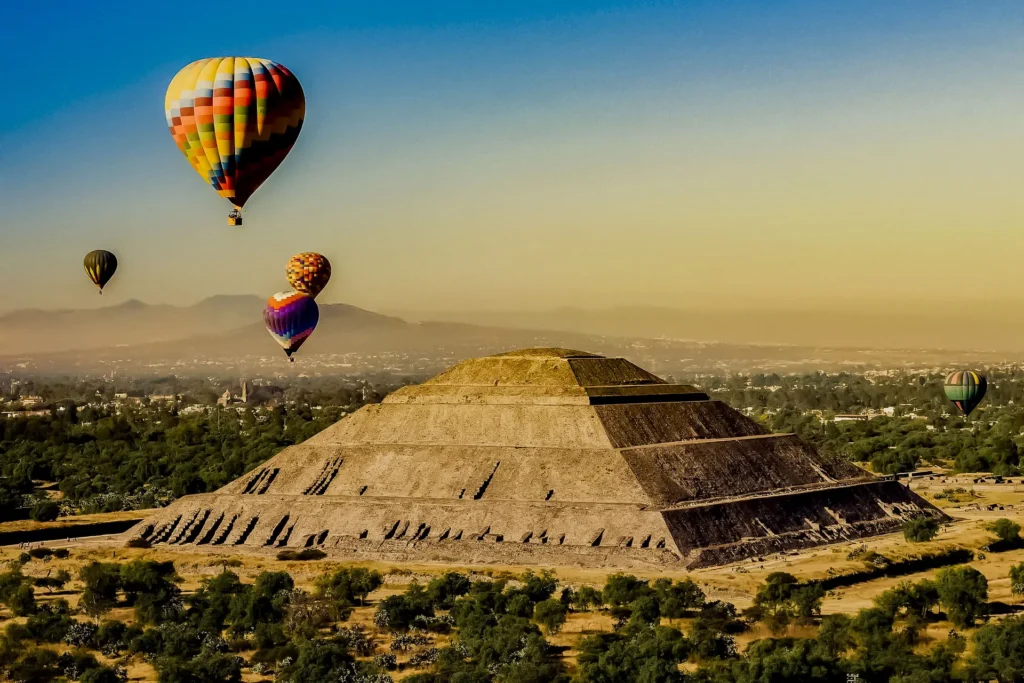
Teotihuacan: the day trip almost everyone should take
If you have four days, take the pyramids day. Go early. Climbing rules have been restricted or changed for preservation: plan for Avenue of the Dead walking and site museums rather than "summit or bust."
Full planning: Ultimate guide to Teotihuacan and how to get there.
For a hosted private morning from the city (pickup, early logistics, artisan stop, cave lunch), see the private Teotihuacan tour.
3, 4, and 5 day Mexico City itineraries
3 days (choose hard)
Day 1: Centro Histórico (Zócalo, cathedral, Templo Mayor, Bellas Artes). Evening tacos near where you sleep.
Day 2: Chapultepec: Anthropology morning, castle or park afternoon. Roma / Condesa dinner.
Day 3: Pick one: Coyoacán + Frida or Teotihuacan. Not both unless you enjoy suffering.
4 days (the sweet spot)
Days 1-2 as above. Day 3: Coyoacán. Day 4: Teotihuacan early. Evening free or lucha if the calendar works.
5 days (best balance)
Add a dedicated food / neighborhood day, a private Xochimilco afternoon, or a museum-light Polanco / Soumaya / fine-dining day.
Sample 4-day skeleton
Day 1 - Centro + soft landing Arrive, hydrate, Centro walking loop, early dinner, sleep. No heroics.
Day 2 - Anthropology + Chapultepec Museum morning, castle or park, Roma / Condesa night.
Day 3 - Coyoacán Frida (if booked), plazas, market snacks, evening back north for dinner.
Day 4 - Teotihuacan Early start, pyramids, return, optional lucha or quiet last dinner.
Swap Day 3/4 based on Monday closures and ticket reality.
Must-know Mexican culture (so the trip lands)
This city is layered, not a theme park
Tenochtitlan under the Zócalo, colonial churches, Porfirian boulevards, muralism, contemporary art, and global restaurants all share the same metro map. Centro is where that stack is most visible in one day.
Food is culture, not a side quest
How people eat (standing at a trompo, lingering in a cantina, debating salsa heat) is as Mexican as any museum label. Participate.
Public space matters
Plazas, parks, and Sunday family energy are part of the social design of the city. Sit. Watch. Do not treat every plaza as a transit corridor between photos.
Murals and modern Mexico
Diego Rivera and the muralists were arguing about history, labor, and identity on walls. Palacio Nacional (when open to visitors) and Bellas Artes are entry points.
Religion and ritual are living
Churches are active. Be respectful with photos and clothing. Day of the Dead is profound and crowded.
Earthquakes (brief)
Mexico City is in a seismic zone. Strong quakes are uncommon on any given short trip, but know drop / cover / hold on, avoid elevators, and follow hotel instructions.
What to pack for a short CDMX trip
- Comfortable walking shoes (sidewalks vary)
- Light layer (buildings run cold; streets run warm)
- Sunscreen for Teotihuacan and midday plazas
- Offline Maps for Roma / Centro / Coyoacán
- eSIM or local SIM so Uber / DiDi works immediately
- Small peso bills for stands, tips, and markets
- Booking codes for Frida / restaurants / day trips
- Phone battery plan (rideshare depends on it)
- Type A/B plug reality for many US/Canada travelers; adapter if your plugs differ (~127V)
How Guateque Time fits (only where it actually helps)
We are a CDMX-hosted operator, not a generic Mexico OTA. On a first short trip, the highest-fit pieces are usually:
- Private Teotihuacan when you want early logistics handled
- Taco crawl when you want San Rafael without guessing
- Lucha night when Arena México is on your list
- Private Xochimilco when you want a boat day without cattle-boat chaos
Use this guide to build the city days yourself. Use us when a hosted block clearly removes friction.
Bottom line
A strong first Mexico City trip is not a scavenger hunt. It is Centro + Anthropology + serious food + Coyoacán + Teotihuacan, run from a walkable base, with Uber or DiDi instead of random cabs, bottled water instead of tap, and enough margin for altitude and traffic.
Do less crossing of the city. Eat more. Book Frida early. Leave one evening unscripted. That is the consensus short-trip version people who know CDMX actually recognize.
FAQ
- How many days do you need for a first trip to Mexico City?
- Four full days is the consensus sweet spot for Centro, Chapultepec / Anthropology, Coyoacán, and Teotihuacan without racing. Three days works if you pick either Coyoacán or Teotihuacan, not both. Five days adds Xochimilco, lucha, or a deeper food night.
- Where should first-timers stay in Mexico City?
- Roma Norte or Condesa for walkability and food. Juárez / Reforma for central hotels and easier airport logistics. Polanco for polished hotels and fine dining. Visit Coyoacán and Centro by day; base there only if you know why.
- How far is the Mexico City airport from downtown?
- From AICM (MEX) to Roma, Condesa, Juárez, or Polanco, plan about 30-60 minutes by car depending on traffic, often longer at peak. AIFA (NLU) is much farther and can take 1.5-2.5+ hours into central neighborhoods.
- Should I use Uber or a taxi in Mexico City?
- Use Uber or DiDi for almost all visitor rides. Avoid hailing unmarked street cabs. At the airport, use the app pickup flow or a prepaid authorized airport taxi desk inside the terminal.
- What should I see and do on a short Mexico City trip?
- Centro Histórico, Museo Nacional de Antropología, a serious taco night, Coyoacán (Frida if tickets exist), and Teotihuacan if you have a fourth day. Add Xochimilco or lucha on a fifth day.
- Where should I eat in Mexico City as a first-timer?
- Make busy taco stands and markets your daily default, then add one special dinner if you want Michelin or a hard reservation. Roma, Condesa, Juárez, and San Rafael are strong food bases for short trips.
- How do I eat street food safely in Mexico City?
- Choose busy, high-turnover stands with meat cooked to order. Skip tap water. Prefer bottled drinks. Ice in established restaurants is usually purified; be more selective at random carts.
- Is Mexico City safe for first-time visitors?
- In central visitor neighborhoods, most travelers do fine with normal big-city habits: rideshares, awareness in crowds, selective late-night walking. Petty theft is the main tourist risk, not cartel headlines.
- Can I drink the tap water in Mexico City?
- No. Use bottled or filtered water. Ice in established restaurants is typically purified.
- Do I need to speak Spanish in Mexico City?
- Helpful, not required in visitor neighborhoods. A few phrases go far at markets and with drivers. Offline Maps plus a translation app covers most short-trip gaps.
- When is the best time to visit Mexico City?
- October through April or early May is the easiest weather window. October-November brings Día de Muertos crowds. June-September has afternoon rains and often better hotel rates.
- Is Teotihuacan worth it on a short trip?
- Yes for most first-timers with a fourth day. Go early and confirm current climbing rules; plan for walking the site, not only summit photos.
From the day
Scenes from Mexico City and the days around it.
Prefer a quieter day
Private transport. Local host. Your pace.
If arranging the bus, gates, and timing sounds like work you would rather skip, we can run the day door to door.
See traveler notes or our Google profile.
Related experiences
If a private guide and door-to-door logistics would make this easier, these Guateque Time experiences are a natural next step.
- Private Teotihuacán Pyramid Tour from Mexico City
Book a private Teotihuacán tour from Mexico City: early pyramid access, hot-air balloon views, artisan obsidian stop, and cave lunch. Hotel pickup in Roma, Condesa & Polanco. From $349 for the trip.
- Hot Air Balloon Ride over the Teotihuacán Pyramids from Mexico City
Private hot air balloon tour over Teotihuacán from Mexico City: balloon flight over the pyramids, Pyramid of the Sun views, and hosted pickup from Roma, Condesa & Polanco. Quote for your dates.
- Private Sunrise Kayak Tour in Mexico City
Book a private sunrise kayak tour in Mexico City: early-morning paddle, beginner-friendly instruction, bilingual host, and round-trip hotel pickup from Roma, Condesa & Polanco. Quote for your dates.
- Private Mexico City Landmarks Tour (Top 5 in One Day)
Private CDMX landmarks tour: Zócalo, Bellas Artes, Ángel de la Independencia, Chapultepec Castle, and Coyoacán. One hosted day with hotel pickup. Quote for your dates.
- Private Xochimilco Tour from Mexico City
Private Xochimilco trajinera with hotel pickup from CDMX. Ideal for groups, bachelor and bachelorette parties. Local host, drinks options, no pier chaos. From $99.
- Private Lucha Libre Experience Mexico City
Private lucha libre night in Mexico City: Arena México coordination, local host, pre-meet, and hotel pickup. Cultural chaos without the logistics headache. From $95.
- Private Taco Tour Mexico City (San Rafael)
Private taco crawl through San Rafael with a local host. Four stops, real neighborhood flavors, hotel pickup included. From $65. Skip tourist-trap taco tours.
Keep reading
More answers in the Mexico City knowledge base.